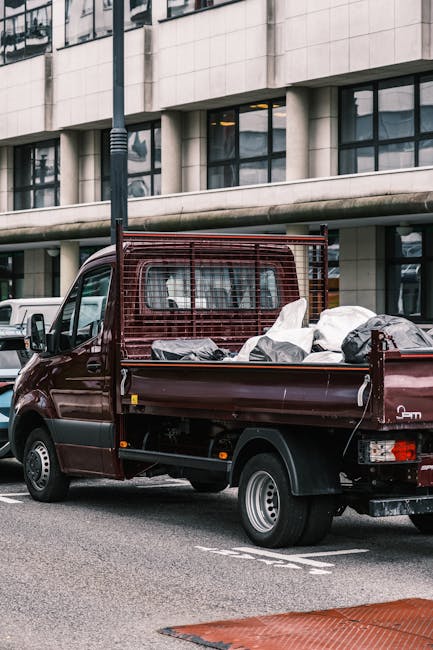
Hidden costs to avoid in Redbridge rubbish removal quotes
If you are comparing rubbish removal quotes in Redbridge, the headline price is only half the story. The real surprise usually comes later: a missed item fee, a labour charge that was never obvious, or a disposal supplement tucked into the small print. That is exactly why understanding Hidden costs to avoid in Redbridge rubbish removal quotes matters. It helps you spot the difference between a fair price and an expensive headache, before anyone turns up with a van and a vague explanation.
Truth be told, most people do not mind paying for a proper service. What they want is clarity. You want to know what is included, what might change, and whether the quote will still hold up when the job gets a bit awkward. In a busy area like Redbridge, where properties can mean narrow stairwells, limited parking, shared entrances, or a ground-floor flat with far more bags than expected, those details really do add up.
This guide breaks down the most common hidden charges, how quotes are usually built, what to ask before you book, and how to compare providers without getting caught out. You will also find a checklist, a comparison table, and a few practical examples so you can make a sensible decision without having to guess.
Table of Contents
- Why hidden costs matter in Redbridge rubbish removal quotes
- How rubbish removal quotes work
- Key benefits and practical advantages
- Who this is for and when it makes sense
- Step-by-step guidance
- Expert tips for better results
- Common mistakes to avoid
- Tools, resources and recommendations
- Law, compliance, standards, or best practice
- Options, methods, or comparison table
- Case study or real-world example
- Practical checklist
- Conclusion
- Frequently asked questions
Why hidden costs matter in Redbridge rubbish removal quotes
A cheap quote can look great at 9am and feel very different by 1pm when the team says the job is larger than described. Hidden costs matter because rubbish removal is rarely just "lift and load". It often involves access, weight, sorting, disposal type, labour time, and sometimes special handling for awkward or restricted items. If any of those are unclear, the final bill can creep upward fast.
In Redbridge, this can be especially relevant for flats, terraced homes with tight side access, shop units, offices, or homes being cleared after a move. A company might quote for a van load, but then discover the waste is upstairs, the parking is distant, or the pile contains a mix of general waste and items that need separate treatment. None of that is unusual. But if it was not explained, it feels like a bait-and-switch.
There is also a trust issue here. A clear quote tells you the provider understands the job. A vague one usually means you will be the one filling in the blanks later. And let's face it, nobody wants to stand in the hallway on collection day wondering why the total has suddenly changed.
Practical takeaway: if a quote looks unusually low, check what is excluded. The true price often lives in the exclusions, not the headline number.
How hidden costs to avoid in Redbridge rubbish removal quotes works
Most rubbish removal pricing is based on a combination of volume, labour, access, and disposal type. Some companies charge by load size. Others use time on site. Some use a hybrid approach, where the initial estimate covers a standard collection but extra charges apply if the reality is different. That is fine, provided the rules are clear.
Here is the basic flow. First, you describe the waste. Then the company estimates how much space it will take and how long the job will need. After that, they may ask for photos, a video, or a more detailed description. Good operators use this stage to reduce surprises. Less careful ones rely on broad assumptions and fill in the gaps later with add-ons.
The hidden cost problem usually appears in one of these moments:
- when the waste turns out to be heavier or denser than expected
- when the collection point is harder to reach than the quote assumed
- when certain items require separate disposal
- when the quote excludes waiting time, loading time, or labour beyond a short window
- when parking, permits, or long carries were never discussed
That is why a proper quote should read like a mini plan, not just a number. If you want a sense of what a transparent provider should disclose, the pricing and quotes page is a sensible place to compare how clear service descriptions are laid out.
One more thing: quotes can be written very neatly and still leave out something important. A polished email is not the same as a complete quote. A bit annoying, but there it is.
Key benefits and practical advantages
Learning to spot hidden charges is not just about saving a few pounds, although that is part of it. It also makes the whole collection process calmer and more predictable. You can plan the day, avoid awkward conversations, and book with more confidence.
1. Better budget control
When you know the likely extras, you can compare providers properly. A slightly higher fixed quote may be better value than a low quote with lots of small print. That is especially true for home clearances where the pile is still being sorted or you are not completely sure what needs to go.
2. Fewer disputes on the day
Disputes tend to happen when expectations are fuzzy. Clear pricing reduces the chance of someone saying, "Oh, we didn't account for that." If the terms are agreed beforehand, the job moves more smoothly. Simple, really.
3. Better service matching
Different clearances need different handling. A garage clearance, for instance, is not the same as an office clearance or a mattress collection. Understanding the cost structure helps you choose a service that matches the job instead of hoping one general quote will suit everything.
4. Easier comparison between companies
Not all rubbish removal quotes are built the same. Once you know what to look for, you can compare like for like. That is where the real value appears. A transparent provider may seem slightly dearer at first, but if their quote includes labour, disposal, and access allowances, it often works out better.
5. More confidence about compliance and disposal
Clear pricing often goes hand in hand with clearer processes. Providers that explain their disposal methods, recycling approach, and insurance coverage tend to be more organised overall. You are not just buying clearance. You are buying peace of mind, which sounds grand but is actually very practical when the van is parked outside and time is ticking.
Who this is for and when it makes sense
This matters for anyone booking waste clearance in Redbridge, but it is especially useful if you are in one of these situations:
- Homeowners clearing out a property before selling, renovating, or letting it out
- Tenants needing to clear bulky items without losing a deposit over avoidable mess
- Landlords and agents who need fast turnaround and predictable invoicing
- Small businesses dealing with office furniture, packaging, or refurbishment waste
- People with mixed waste where some items are ordinary, and others need special handling
- Anyone comparing several quotes and trying to work out which one is actually fair
It also makes sense if you have already been caught by a surprise charge before. Many people only become quote-savvy after the first awkward invoice. That is usually the moment the penny drops.
If your job is broader than a one-off collection, it can help to browse related services such as house clearance, flat clearance, or office clearance so you can see how different jobs are typically framed.
For messy, layered jobs where clutter has built up over time, a structured approach matters even more. There is a reason people dealing with serious decluttering often ask for a more detailed assessment. Nobody wants a half-clearance and a second invoice.
Step-by-step guidance
Step 1: Describe the waste properly
Start with an honest description. Include bag counts, large items, furniture, appliances, and anything awkward such as broken glass, paint tins, or heavy rubble. A quick photo is often better than a long message. In our experience, clear images save a lot of back-and-forth.
Step 2: Ask what the quote includes
Do not assume labour, disposal, loading, and mileage are included. Ask directly. If there is a minimum charge, find out what it covers. If there is a "starting from" price, ask what would make it change. Straight question, straight answer. Or at least it should be.
Step 3: Check access details
Access can affect cost more than people expect. Mention stairs, lifts, long driveways, gated entry, parking restrictions, and whether the waste is at the front or back of the property. A provider who knows the access conditions can quote more accurately and avoid the awkward, "We need to adjust that" conversation later.
Step 4: Confirm item-specific charges
Some items can cost more to remove because they require different handling, sorting, or disposal routes. Common examples include fridges, freezers, mattresses, sofas, and certain electrical items. Ask whether those are included in the quoted price or priced separately.
Step 5: Clarify timing and waiting charges
If you need a specific arrival window, ask whether there is an extra fee for timed visits. Also check whether waiting time is charged if access is delayed. This matters when you are coordinating a move, a delivery, or a building contractor. Five minutes can become fifty without anyone planning it.
Step 6: Compare on total value, not headline price
Once you have two or three quotes, compare the full picture. Which one explains more? Which one looks more complete? Which one feels clearer about what happens if the job changes? The cheapest quote is not always the cheapest in the end. Weird but true.
Step 7: Get the terms in writing
Even a short written confirmation helps. You want the waste type, expected load, inclusions, and possible extras documented. That way there is less room for confusion on the day.
Expert tips for better results
Here are the things that tend to make the biggest difference when you are trying to avoid hidden costs in Redbridge rubbish removal quotes.
- Use photos from a few angles. One picture of a pile rarely tells the full story. Show the access route too if it is awkward.
- Ask for the price basis. Is it by volume, time, item type, or a combination? Knowing the formula helps you judge the quote.
- Check for minimum charges. A small job may still trigger a minimum load fee.
- Ask about mixed waste. A mixed pile can be more expensive than a neat stack of similar items.
- Find out what happens if the load is larger. Will the team stop and re-quote, or continue and bill later?
- Keep the waste accessible. If you can safely move items closer to the entrance beforehand, you may save labour time.
- Separate obvious special items. Fridges, mattresses, and hazardous items should be flagged early.
A useful little habit: write down the quote summary in your own words. It takes two minutes and can save a messy conversation. Also, when you are tired and juggling a move, it is very easy to forget the part where "all-in" quietly meant "all-in, except the bits that weren't".
Expert summary: the best rubbish removal quote is not necessarily the lowest one. It is the clearest one. Clarity reduces surprise charges, and surprise charges are where most people feel stung.
Common mistakes to avoid
Most hidden-cost problems come from a handful of avoidable mistakes. The good news? They are all fixable once you know what to look for.
Only asking for a price, not a breakdown
A single number tells you very little. You need to know what it covers and what could change it.
Forgetting about access
Stairs, parking, lifts, distance from the van, and restricted access can all affect the final cost. If the provider finds out on arrival, the quote may need adjusting.
Assuming all bulky items are treated the same
A sofa is not the same as a pile of timber. A freezer is not the same as garden waste. Different items can have different disposal or handling requirements.
Not checking disposal standards
If a company is vague about how it handles the waste, that is worth pausing over. You want a provider who can explain their process in plain English.
Ignoring cancellation or rebooking terms
If your plans change, some firms may charge a fee. That is not unusual, but it should be explained before you commit.
Choosing based only on speed
Same-day collection can be very useful. Still, if the quote seems thin on detail, the rush can cost more than the wait. A little patience can save a surprising amount.
Overlooking the site conditions
Some properties are simply trickier. Basement access, narrow hallways, shared entrances, or nearby traffic restrictions can all affect labour time. Mention them up front.
Tools, resources and recommendations
You do not need fancy tools to avoid hidden costs. A smartphone, a checklist, and a bit of honesty go a long way. Still, a few simple resources can make the process smoother.
- Photos and short videos: useful for showing the type and amount of waste.
- Room-by-room notes: helpful for larger clearances or when items are spread across a property.
- A list of special items: appliances, bulky furniture, and anything fragile or potentially hazardous.
- A simple comparison sheet: write down each quote's inclusions, exclusions, access assumptions, and timing.
- Service pages with clear scope: useful for checking whether a company is transparent across different jobs, such as furniture disposal, fridge and appliance removal, and hazardous waste disposal.
For bigger clear-outs, it can also be worth reviewing broader service pages like home clearance, garage clearance, and loft clearance. These often give you a better sense of how the work is scoped.
If you are weighing up sustainability as well as price, a company's recycling and sustainability information can be useful. It will not tell you everything, of course, but it does show whether the business thinks about disposal beyond just getting things out of the way.
Law, compliance, standards, or best practice
For rubbish removal in the UK, best practice matters. You do not need to become a compliance expert overnight, but you should expect the provider to operate responsibly and explain their process clearly.
As a customer, a few points are worth keeping in mind. Waste should be handled and transported by people who know what they are doing, especially where mixed loads, electrical items, sharp materials, or potentially hazardous waste are involved. If a provider is vague about insurance, safety, or disposal methods, that is usually a sign to slow down and ask more questions.
It is also sensible to ask how the company separates recyclable material from general waste, whether it has a health and safety policy, and how it manages access and lifting on site. Those details matter for both service quality and risk reduction. A provider with clear insurance and safety information and a visible health and safety policy is generally giving you a better sign that the job will be handled properly.
Where confidential or sensitive items are involved, such as old paperwork, ask about secure handling rather than assuming it is included. Likewise, if your waste includes items that may need specialist disposal, those should be identified before collection. That is not just a pricing issue. It is a handling issue too.
The sensible rule is simple: clear pricing, clear access expectations, clear disposal route. If any one of those is muddy, the risk of a surprise goes up.
Options, methods, or comparison table
Not every rubbish removal job needs the same approach. The right method depends on volume, item type, access, and how quickly you need it gone.
| Approach | Best for | Potential hidden cost risk | What to check |
|---|---|---|---|
| Fixed quote based on photos | Smaller, clearly shown jobs | Medium if photos miss access issues | Ask what happens if the load is larger on arrival |
| Volume-based pricing | Mixed household or office waste | High if the pile is hard to judge | Confirm whether labour and disposal are included |
| Time-based pricing | Complex clearances with variable effort | Medium if access is slow or parking is difficult | Ask about waiting time and minimum booking time |
| Item-based pricing | Bulky single items or appliance removal | Low to medium depending on exclusions | Check if stair carry, dismantling, or special handling costs extra |
For most people, the safest route is the one that matches the job description most closely. A one-item collection is not a full-house clearance, and a garage full of mixed odds and ends is not the same as a neat stack of cardboard. The more accurately you match the service to the job, the fewer surprises you will get.
Case study or real-world example
Imagine a small flat in Redbridge after a move-out. There are two wardrobes, a mattress, several black bags, a broken desk, and some old kitchen bits. The customer asks for a quick price and gets a very tempting figure. Nice and low. But the quote did not mention parking restrictions, the top-floor walk-up, or the fact that the desk needs to be dismantled before it can leave the property.
On collection day, the team realises the load is more awkward than expected. The final cost rises. Not because anyone necessarily acted badly, but because the quote left too much unsaid. The customer feels annoyed, the provider feels it was fair, and the whole thing becomes a bit tense for no good reason.
Now compare that with a clearer version. The customer sends photos, mentions the stairs, confirms the items, and asks whether dismantling is included. The quote is slightly higher at the start, but it holds. The collection happens smoothly. No wobble, no surprise bill, no gritted teeth in the hallway while someone checks a clipboard.
That is the real lesson: better information usually costs nothing, but missing information often costs something. Sometimes quite a lot.
Practical checklist
Use this before you accept any rubbish removal quote in Redbridge.
- Have I described every item that needs removing?
- Did I send photos or a short video where possible?
- Do I know what the quote includes?
- Have I asked about labour, loading, disposal, and mileage?
- Have I mentioned stairs, parking, lifts, gates, or long carries?
- Did I ask about extra charges for bulky, heavy, or special items?
- Do I know whether timing changes the price?
- Have I checked cancellation or rebooking terms?
- Is the quote written down clearly?
- Does the company explain how waste is handled or recycled?
If you can tick most of those off, you are already ahead of the game. Honestly, that is half the battle.
Conclusion
Hidden costs in rubbish removal quotes are usually not hidden because they are impossible to find. They are hidden because people are rushed, assumptions are made, and the fine print gets left for later. In Redbridge, where properties and access conditions can vary so much from one street to the next, a careful quote check is one of the easiest ways to protect your budget.
Focus on the full picture: what is included, what might change, how access affects the job, and whether the provider explains their pricing in a way that makes sense. If a company is upfront, detailed, and easy to question, that is usually a very good sign. And if not, well, there are other options.
Get a free quote today and see how much you can save.
Choose clarity over guesswork, and the whole process becomes much lighter. A good clearance should take pressure off your day, not add to it. That is the standard worth aiming for.
Frequently Asked Questions
What hidden costs should I watch for in rubbish removal quotes?
Look out for labour charges, access fees, long carry charges, extra disposal costs, minimum load fees, and separate pricing for bulky or specialist items. The main risk is assuming a quote is all-inclusive when it is not.
Why is one Redbridge rubbish removal quote so much cheaper than the others?
Sometimes it is a genuine bargain, but often a very low quote leaves out something important. It may exclude labour, disposal, or item-specific charges. Compare the details, not just the headline number.
Do rubbish removal companies charge extra for stairs or no parking?
They can, yes. If access is awkward, more labour and time may be needed. Always mention stairs, lifts, parking restrictions, and long carries before you accept the quote.
Are appliance removals usually included in standard quotes?
Not always. Fridges, freezers, washing machines, and similar items may need separate handling. Ask whether appliance removal is part of the quoted price or an extra charge.
How can I tell if a quote is fixed or only an estimate?
Ask directly. A fixed quote should state what it covers and under what conditions it might change. An estimate is more flexible and may rise if the job turns out differently from the description.
Should I send photos before getting a rubbish removal quote?
Yes, if possible. Photos or a short video usually help the company judge volume, access, and item type more accurately. That reduces the chance of surprises later.
Is it cheaper to book rubbish removal in advance?
Often it can be more predictable, especially if you have time to compare quotes and clarify details. Last-minute bookings can still work, but there is less time to check for hidden charges.
What if the rubbish is more than I said it was?
The provider may need to re-quote or add an extra charge. That is why it is worth being honest about the amount and type of waste from the start, even if you are unsure.
Can I avoid hidden costs by choosing the cheapest quote?
Not reliably. The cheapest quote can become expensive if it excludes key parts of the job. The better aim is a clear, complete quote that matches your actual needs.
Do I need to worry about recycling or disposal standards?
Yes, at least a little. A professional provider should be able to explain how waste is sorted and handled. Clear disposal practices are a good sign that the business is organised and responsible.
What should I ask before I book rubbish removal in Redbridge?
Ask what is included, whether there are extra charges for access or heavy items, if the quote is fixed, what happens if the load changes, and how the waste will be handled. Those five questions catch most of the common problems.
What is the safest way to compare rubbish removal companies?
Compare the total quote structure, not just the price. Look at inclusions, exclusions, access assumptions, item-specific charges, and whether the provider is clear and responsive. A bit of patience here usually pays off.