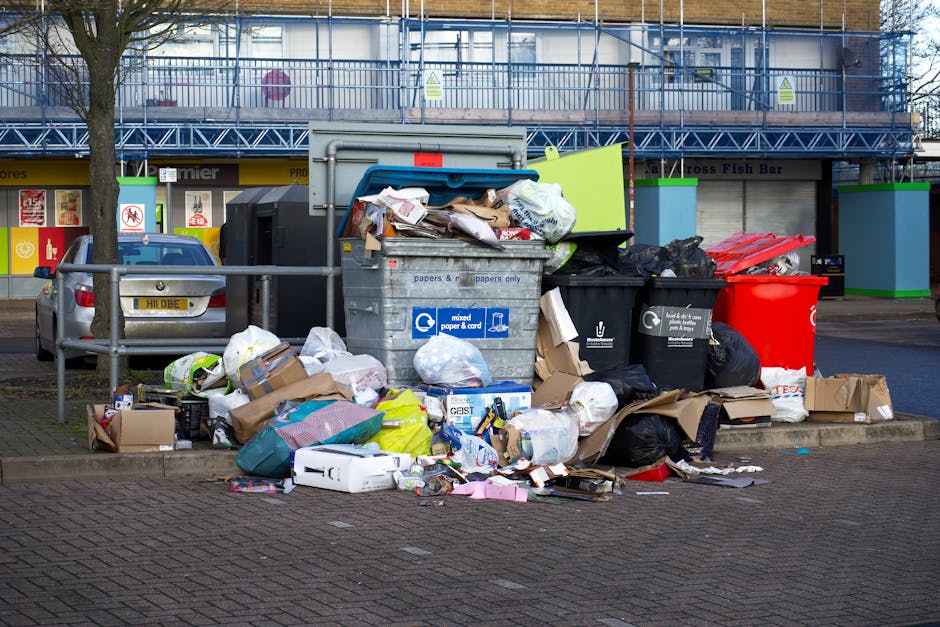
Valentines Park bulky rubbish removal tips for weekend clearouts
If you are staring at an overflowing garage, a tired sofa, or a pile of broken garden furniture and thinking, "Right, this weekend has to be the one," you are in the right place. Valentines Park bulky rubbish removal tips for weekend clearouts are really about making a big job feel manageable: planning what goes, sorting what stays, and choosing the safest, quickest way to get everything out without turning your Saturday into a saga. In our experience, the difference between a smooth clearout and a stressful one is rarely effort. It is preparation. A little structure goes a long way, especially when you want the house, flat, or storage space back by Sunday evening.
This guide breaks the process into practical steps, with local-friendly advice, simple decision points, and a few things people often forget until the last minute. Let's make the clearout feel less like a mountain and more like a checklist.
Table of Contents
- Why Valentines Park bulky rubbish removal tips for weekend clearouts Matters
- How Valentines Park bulky rubbish removal tips for weekend clearouts Works
- Key Benefits and Practical Advantages
- Who This Is For and When It Makes Sense
- Step-by-Step Guidance
- Expert Tips for Better Results
- Common Mistakes to Avoid
- Tools, Resources and Recommendations
- Law, Compliance, Standards, or Best Practice
- Options, Methods, or Comparison Table
- Case Study or Real-World Example
- Practical Checklist
- Conclusion
- Frequently Asked Questions
Why Valentines Park bulky rubbish removal tips for weekend clearouts Matters
Weekend clearouts sound simple until you actually start moving things. Bulky rubbish takes up space, gets awkward fast, and often includes a mix of materials that cannot just be left outside with the rest of the household waste. Old wardrobes, mattresses, damaged appliances, dismantled shelves, broken chairs, garden waste, and renovation offcuts all behave differently once they are out of the room. Some are heavy, some are sharp, some are contaminated, and some are best handled separately.
For Valentines Park residents, a weekend clearout is often the only realistic slot. That makes timing matter. You may have limited parking, neighbours close by, and a narrow window before Monday routines kick in again. The aim is not just to remove waste, but to do it in a way that is safe, efficient, and not disruptive to the street. A thoughtful approach also helps reduce unnecessary trips, which is good for your back, your schedule, and frankly your patience.
There is also the cost side. A badly planned clearout can mean paying for the wrong disposal method, over-ordering collection capacity, or keeping half the pile around for another week because you ran out of time. Nobody wants that. Truth be told, a bit of planning can save more than people expect.
If you are trying to decide between a mixed waste pickup, a dedicated clearance service, or hiring a skip, it helps to understand what you are actually removing. For heavier household items such as sofas, mattresses, or white goods, specialist pages like mattress and sofa disposal and fridge and appliance removal are useful references when the load is not just plain rubbish. The same goes for larger home projects, where home clearance can sometimes make far more sense than tackling each item one by one.
How Valentines Park bulky rubbish removal tips for weekend clearouts Works
At a practical level, bulky rubbish removal is the process of grouping large, awkward, or heavy items and getting them collected, moved, sorted, and taken to the appropriate disposal or recycling route. The weekend part simply means you need to compress the process into a short timeframe. That changes the strategy quite a bit.
The best weekend clearouts usually follow a sequence:
- Identify exactly what is going.
- Separate reusable, recyclable, and waste items.
- Check for anything hazardous or specialist.
- Clear access routes so the load can be moved easily.
- Choose the disposal method that fits the size and type of waste.
- Book or arrange collection early enough to avoid Sunday panic.
That last point matters more than people think. If you are hoping to use a service over the weekend, availability can tighten quickly. A service such as waste removal is generally best suited to mixed loads, while more focused jobs may be better handled through pages like furniture clearance, garage clearance, or loft clearance.
Weekend clearouts also work better when you treat the space like a mini project site. That means gloves on, clear floor space, and no piles in the hallway that make everyone trip over a broken lamp at 9am. A mildly chaotic clearout can quickly become a safety issue. Not dramatic, just annoying and avoidable.
Key Benefits and Practical Advantages
A well-planned bulky rubbish clearout does more than make things look tidier. It can change how your home functions day to day. Once the unused items are gone, rooms feel larger, storage becomes usable again, and you stop wasting time stepping around things you intended to deal with "next weekend".
Here are the main practical advantages:
- Faster home reset: one dedicated weekend often gets more done than weeks of half-finished effort.
- Better safety: fewer tripping hazards, less lifting in awkward spaces, and reduced clutter around exits.
- Smarter sorting: it becomes easier to separate recyclables, reuse items, and waste.
- Less stress: you know what is happening, who is doing what, and when the job will finish.
- Improved value of space: garages, lofts, and spare rooms can be put back to real use.
There is a subtler benefit too: momentum. Once a clearout begins to go well, people usually keep going. One bag becomes five. One chair becomes the whole corner. That burst of progress can be oddly satisfying. A bit addictive, even.
For households dealing with mixed items, choosing the right specialist route matters. A general household clearout might point you towards house clearance, while business users in need of tidy, discreet disposal may find business waste removal more appropriate. If you are clearing out a room with old paperwork, confidential shredding may also be part of the plan, which is where confidential shredding becomes relevant.
Who This Is For and When It Makes Sense
This kind of weekend clearout is especially useful if you are:
- moving house and need the old place emptied quickly
- reclaiming a garage, loft, or spare room
- clearing furniture after a redecoration
- dealing with a buildup of garden waste after a tidy-up
- sorting a flat where storage is tight
- preparing a rental property for new occupants
- removing a few heavy items that are awkward to move alone
It also makes sense when the waste is too much for a normal household bin collection but not quite enough to justify a full-scale refurbishment plan. That middle ground is where many people get stuck. Do you hire a skip? Book a clearance? Borrow a van? Ask two friends and a lot of favours? Well, maybe not the last one, unless you enjoy vague promises and sore backs.
For smaller spaces, especially upstairs flats or properties with limited access, a flat clearance approach can be much more practical than trying to manoeuvre a pile of bulky bits through tight stairwells. For outdoor overflows, garden clearance is often the cleaner route when the load is mostly branches, clippings, pots, and broken outdoor furniture.
Step-by-Step Guidance
If you want your weekend to run smoothly, keep the process structured. This is one of those jobs where a clear order saves you from doubling back endlessly.
1. Walk the space first
Before moving anything, take a slow walk around the area. Note what is heavy, what is breakable, what needs two people, and what might need special handling. You might spot a hidden item tucked behind the chest freezer or under the eaves. It happens.
2. Sort into simple categories
Create four broad groups:
- Keep - items staying in the home
- Donate or reuse - usable items someone else may want
- Recycle - items that can be separated cleanly
- Dispose - broken, contaminated, or unwanted bulky waste
Keep the categories simple. This is not the moment for overthinking every old cable and cracked flowerpot.
3. Set aside specialist items early
Anything hazardous, refrigerant-based, electrical, or especially heavy should be separated straight away. That includes things like old fridges, certain chemicals, or damaged paint tins. If you are unsure, the safest move is to treat it as specialist waste rather than guessing. For those cases, hazardous waste disposal is the right place to start reading.
4. Measure access routes
Look at door widths, stair turns, lift capacity, hallway corners, and parked cars outside. A bulky item that looks manageable in a room can suddenly become a puzzle in a narrow stairwell. In tight homes, planning the exit route first is often more important than the lifting itself.
5. Break down what can be dismantled
Flat-pack furniture, shelving, bed frames, and some garden structures are easier to remove once partially dismantled. Keep screws and fittings in a labelled bag if you think any item might be reused. Small detail, big difference.
6. Choose the right disposal path
Once you know the types and volume of waste, the right method becomes clearer. Mixed general loads often suit waste removal, while furniture-heavy jobs may call for furniture disposal. If you are clearing a whole property, a broader home clearance or house clearance route can save time.
7. Load safely and keep pathways clear
Move the heaviest objects first, but only if you have room to set them down safely. Do not block exits. Do not stack items where they can topple. And do not pretend the broken wardrobe is "fine for now" if one wobble could take out a lamp or a shin.
8. Finish with a final sweep
When the bulky waste is gone, do one last check for small leftovers: loose screws, shattered bits of plastic, splinters, cable ties, and dust. The room always looks better after a proper sweep. Always.
Expert Tips for Better Results
Small decisions make a big difference on clearance day. These are the practical habits that tend to separate an easy job from a frustrating one.
- Start early. Morning energy is better, and you have more time to adapt if something takes longer than expected.
- Keep one "decision box". If you are unsure about an item, put it in a temporary hold area instead of debating it for ten minutes.
- Protect floors and corners. Old blankets, cardboard, or boards can stop scratches in hallways and doorframes.
- Use the right footwear. Trainers or boots with grip are a small win that matters more than people admit.
- Separate clean materials from mixed waste. Clean timber, metal, cardboard, and some appliances are easier to handle when not buried in general rubbish.
- Think in exits, not just piles. A tidy stack is useful only if it can actually leave the property.
If you are clearing a sofa, mattress, or appliance, it is worth reading the relevant service pages before you start moving it. The shape, weight, and handling requirements vary more than you might expect. A bulky item that needs two people and a steady turn around a landing is not a "quick job". It just isn't.
One small but useful tip: keep bins, bags, and any recycling containers visible during the work. If they disappear behind piles, sorting slows down and everything becomes one messy heap. Been there, regretted that.
Common Mistakes to Avoid
Most weekend clearout headaches come from the same handful of mistakes. Avoid these and the whole job gets calmer.
- Leaving sorting until after loading. Once items are stacked together, separating them takes longer and creates confusion.
- Ignoring weight distribution. Heavy items on top of lighter ones can damage loads and make lifting unsafe.
- Forgetting special waste. Appliances, chemicals, and certain electrical items should not be treated like ordinary rubbish.
- Trying to do everything alone. Some things really do need two people. Pride is a poor lifting aid.
- Booking too late. If you need a collection on Saturday afternoon and leave it to Saturday morning, you may be out of luck.
- Underestimating access. Many clearouts are delayed because someone only checks the driveway or stairwell after the items are already ready to move.
There is also a mental trap: keeping too much "just in case". A worn-out chair with a missing leg is not a future design project. Sometimes it is just waste, and that is fine.
Tools, Resources and Recommendations
You do not need a van full of equipment to do a good clearout. A few basic tools make the work much easier.
| Tool or resource | Why it helps | Best for |
|---|---|---|
| Heavy-duty gloves | Protects hands from splinters, sharp edges, and grime | General bulky waste, old furniture, garden items |
| Strong bin bags or rubble sacks | Keeps loose waste contained | Mixed small waste, broken items, sweep-up debris |
| Hand trolley or sack truck | Reduces lifting strain | Appliances, boxed items, heavier furniture parts |
| Screwdriver set | Helps dismantle shelves, beds, and flat-pack units | Furniture breakdown, access prep |
| Labelled boxes or tape | Keeps keepers, donations, and hardware separate | Sorting and staging |
| Measuring tape | Checks doorways and stair access before moving items | Flats, narrow hallways, awkward furniture |
If your clearout includes items like shelves, fitted furniture, or garage clutter, a dedicated space-specific service can help. You can explore options such as garage clearance or loft clearance depending on where the mess has built up. For bigger mixed projects, builders waste clearance is worth considering where the waste includes renovation debris, timber offcuts, and packaging.
It is also sensible to check broader operational details before booking anything: pricing and quotes, recycling and sustainability, and insurance and safety can all help you choose with more confidence.
Law, Compliance, Standards, or Best Practice
For bulky waste, the key legal and best-practice point is simple: waste should be handled responsibly, transferred to an appropriate carrier, and kept separate from items that need special treatment. If you are using a disposal service, it is sensible to check that they operate transparently, take safety seriously, and have a clear process for handling waste correctly.
In everyday terms, good practice means:
- not leaving waste on the pavement where it could obstruct others
- keeping hazardous items apart from household rubbish
- being honest about the type and amount of waste you have
- making sure loads are safe to carry and do not create avoidable risk
- using a service that explains its approach clearly
If you need confidence around service standards and customer handling, useful pages to review include health and safety policy, terms and conditions, complaints procedure, and payment and security. These pages are not glamorous, admittedly, but they tell you a lot about how seriously a company treats the job.
One practical note: if your waste includes confidential papers or business documents, do not mix them with general disposal. Separate handling is the safer option, and it keeps things simple. No one wants a stack of bank statements sitting under an old cupboard for days. Not ideal.
Options, Methods, or Comparison Table
Choosing the best method depends on what you are clearing, how much there is, and how quickly you need the space back. Here is a straightforward comparison.
| Method | Best for | Advantages | Watch-outs |
|---|---|---|---|
| DIY tip run | Small amounts of manageable waste | Can be low-cost if you already have transport | Time-consuming, heavy lifting, repeated trips |
| Skip hire | Ongoing projects or sizeable mixed loads | Useful if you can fill it over time | Space needed, permit considerations, loading limits |
| Man and van-style clearance | Weekend clearouts with bulky items | Fast, flexible, load removed for you | Best when waste type and volume are clear upfront |
| Specialist item disposal | Mattresses, sofas, fridges, appliances | More appropriate handling for difficult items | May need separate booking or sorting |
For many Valentines Park weekend clearouts, the most efficient option is the one that removes the physical burden as well as the waste. If you are clearing a whole property or multiple rooms, a combined route such as house clearance or home clearance often makes more sense than trying to piece together several smaller solutions.
If you are unsure what can go into a container or mixed load, it can also help to review what can go in a skip. Even if you are not hiring a skip, the guidance helps you understand what usually needs separate treatment.
Case Study or Real-World Example
Imagine a typical Saturday in Valentines Park: a family has finally decided to clear the garage, the spare room, and the old garden corner where a broken bench has been sitting since last winter. Nothing dramatic, just years of "we'll deal with it later" all arriving at once.
They start by sorting the garage into keep, donate, recycle, and dispose. The old bench goes in dispose. A broken bedside cabinet goes there too. The usable paint tins are separated, though a couple are checked carefully because they are not something you want to guess about. One dusty bike is kept for repair. A mattress is identified early and set aside for specialist handling rather than being dragged into the general pile.
The biggest win comes from access planning. They move a car early, clear the hallway, and take the shed items out before the bulky furniture. That means no awkward backtracking and no furniture wedged behind a smaller item. By mid-afternoon the space feels completely different. There is still dust, naturally, and one odd screw that turns up near the skirting board, but the heavy part is done.
That is the real lesson: the job does not need to be perfect, it needs to be organised. If it is organised, it usually ends well.
Practical Checklist
Use this before you start lifting anything.
- Have I listed every bulky item that needs to go?
- Have I separated anything reusable or recyclable?
- Have I identified hazardous or specialist waste?
- Do I know how each item will leave the property?
- Are hallways, doors, stairs, and outdoor routes clear?
- Do I have gloves, bags, tape, and basic tools ready?
- Have I checked whether I need two people for any item?
- Is the booking or collection time confirmed?
- Have I protected floors, corners, and surfaces?
- Have I planned a final sweep once the load is out?
And one more, because it saves headaches: have I actually measured the awkward item before trying to carry it? A sofa that "looks fine" can become a small disaster at the last turn. It happens more often than people admit.
Conclusion
Weekend clearouts are easier when you treat them as a plan rather than a scramble. The best Valentines Park bulky rubbish removal tips for weekend clearouts all come back to the same idea: sort first, lift safely, separate specialist items, and choose the disposal route that matches the job. Whether you are clearing a single room, a garage full of odds and ends, or a whole property, the right approach will save time and reduce stress.
Start with the biggest items, keep the pathways open, and do not underestimate how much smoother things go when the waste is properly grouped before collection. Small actions, big difference. And when the room is finally clear, the quiet feels different. Better, somehow.
Get a free quote today and see how much you can save.
For more information about who is behind the service and how the company works, you can also review about us or go straight to book online when you are ready to move things along.
Frequently Asked Questions
What counts as bulky rubbish in a weekend clearout?
Bulky rubbish usually means large or awkward items such as sofas, mattresses, wardrobes, shelving, white goods, garden furniture, and dismantled household fixtures. If it is heavy, awkward, or difficult to fit in normal bins, it probably counts.
How do I prepare for a bulky rubbish removal in Valentines Park?
Start by sorting items into keep, donate, recycle, and dispose. Then clear access routes, check for specialist waste, and decide whether you need general removal or a specific service such as furniture disposal or fridge and appliance removal.
Is it better to hire a skip or book a clearance service?
It depends on the job. A skip can suit ongoing work and steady loading, while a clearance service is often better for a weekend cleanout where you want the waste removed quickly without doing the loading yourself.
Can I mix furniture, garden waste, and broken household items together?
Sometimes mixed loads are fine, but specialist items should be kept separate. For example, a mattress, a fridge, or hazardous materials may need their own handling route. Sorting first keeps the process cleaner and safer.
What should I do with items that might be reusable?
Set them aside before disposal. A usable chair, table, or cabinet should not get buried in the waste pile. If you are unsure, keep it in a separate area until you decide whether to reuse, donate, or clear it.
How early should I book weekend rubbish removal?
As early as you can. Weekend slots can fill quickly, especially for larger jobs. Booking early gives you more choice and helps you avoid a last-minute scramble on Saturday morning.
Are there items that need specialist disposal?
Yes. Common examples include fridges, freezers, some appliances, chemicals, paint, and other hazardous waste. These should be handled separately rather than added to ordinary rubbish.
Can I clear a loft or garage in one weekend?
Often, yes, if the space is organised and the load is not enormous. A loft clearance or garage clearance usually goes best when you sort early, plan the exit route, and avoid dragging everything into one giant pile.
What if I live in a flat with narrow stairs or limited access?
Then access planning becomes even more important. Flat clearance is usually easier when you measure doors and stair turns first, especially for larger furniture that might not move cleanly through tight spaces.
How do I know if a company is handling waste properly?
Look for clear information about safety, insurance, recycling, payment, and customer procedures. Pages like insurance and safety, health and safety policy, and recycling and sustainability can give useful reassurance before you book.
Can I remove builders waste during the same weekend clearout?
Yes, if it is mainly small renovation debris, packaging, timber offcuts, and similar material. If your pile is more building-related than household-related, builders waste clearance may be the better fit.
What is the biggest mistake people make with bulky rubbish removal?
Honestly, it is starting without a plan. Once you know what is going, what is staying, and what needs special treatment, the rest becomes much easier. The clearout stops feeling like chaos and starts feeling like progress.